How to Choose an Interior Design Style for Your Room
Choose an interior design style by checking your furniture, habits, maintenance needs, and light. Narrow it to two directions and compare both on your photo.
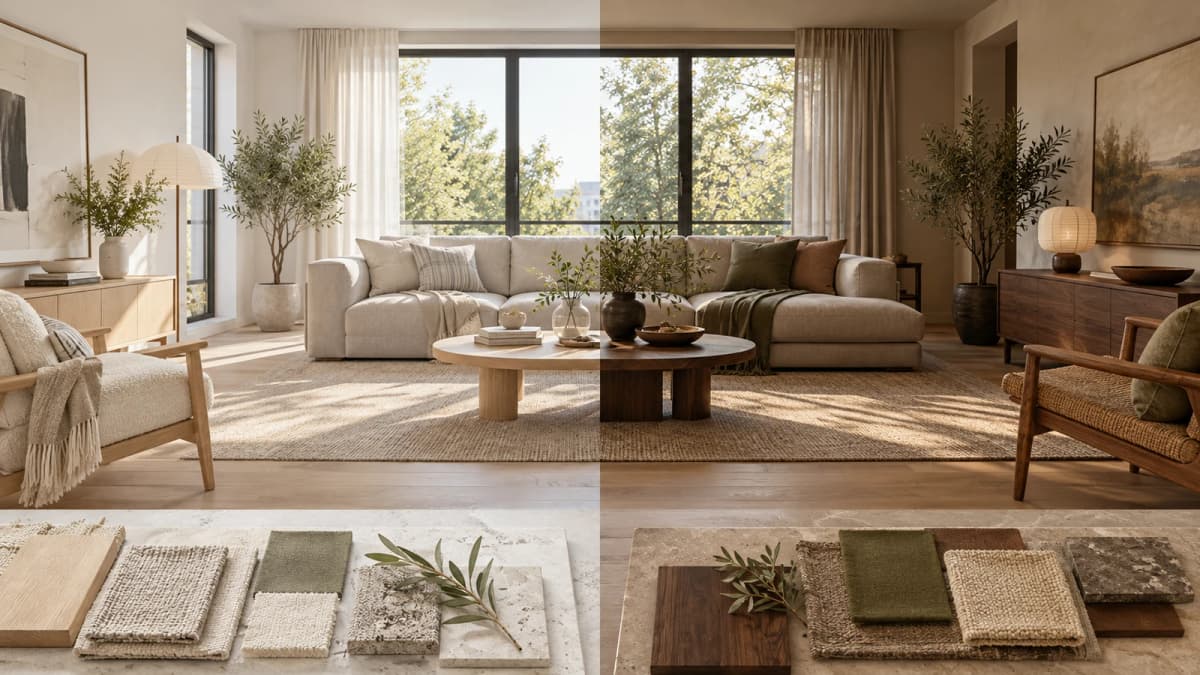
Cover: editorial illustration created October 27, 2026, not a Spaceora test result or a verified plan.
TL;DR
Do not start by choosing from a long list of style names. First record the furniture you want to keep, how the room is used, how much upkeep you accept, and the light the room receives. Use those constraints to narrow your preferences to two directions, then compare both on the same room photo and keep only the ideas that work in the real space.
Direct answer: Choose an interior design style by matching visual preferences with practical constraints. Look for repeated colors, materials, shapes, and room density in spaces you like, then test those patterns against your existing furniture and daily routine. A style quiz can help you name two starting directions, but it is a preference guide rather than an objective diagnosis.
You do not need one permanent label for your whole home. You need a clear enough direction to make the next few decisions consistent.
Start with what the room already has
List the pieces and features that are expensive, useful, sentimental, or difficult to change. These are design inputs, not obstacles.
Keep-item inventory
| Item or feature | Record | Why it matters |
|---|---|---|
| Main furniture | Material, color, shape, condition, and dimensions | A style direction should work around pieces that remain |
| Flooring and fixed finishes | Color temperature, pattern, and reflectivity | They influence which woods, fabrics, and wall colors feel connected |
| Windows and daylight | Direction, brightness, glare, and privacy needs | The same palette can look different in strong or limited light |
| Storage | What must be hidden and what can stay visible | “Minimal” fails quickly when the room has nowhere for daily items |
| Art and personal objects | Pieces you want to see every day | They can set the palette and prevent the room from feeling generic |
| Maintenance limits | Pets, children, dust, spills, and cleaning routine | A photographed look needs a durable version that fits daily life |
An independent interior designer's style guide recommends looking for repeated qualities in rooms you like, including light level, color temperature, density, line, materials, and pattern, then checking those preferences against real life. IKEA's current style hub also presents styles as flexible expressions that can be calm, coordinated, eclectic, mixed, natural, or colorful rather than one compulsory formula.
Separate preference from practical constraints
Use a simple matrix before naming a style.
| Question | Your preference | Practical constraint | Direction to test |
|---|---|---|---|
| How full should the room feel? | Spare surfaces | Books and children's items need storage | Calm base with closed storage, not an empty showroom |
| Which materials repeat? | Pale wood and linen | Existing walnut cabinet stays | Add pale textiles and repeat walnut in smaller accents |
| What lighting feels comfortable? | Soft and warm | Room has limited daylight | Layer lamps and test samples in the actual light |
| How much pattern do you enjoy? | One noticeable rug | Pet hair and frequent cleaning | Low-pile pattern with washable textiles elsewhere |
| Which shapes appeal to you? | Rounded seating | Narrow route beside sofa | Keep curves in smaller chair, lamp, or table details |
This prevents a common mistake: selecting a photographed style that only works after removing everything the room needs.
How do you find the patterns in rooms you like?
Collect a small, varied set of rooms you would genuinely live in. Do not save only perfectly staged spaces. Include rooms with similar light, storage needs, and existing furniture when possible.
For each image, note:
- warm or cool color temperature;
- bright or low, layered lighting;
- clean lines or softer curves;
- quiet or visible pattern;
- pale, medium, or dark wood;
- open surfaces or collected objects;
- the materials that repeat.
Then collect several rooms you dislike and write the reason in plain language: “too cold,” “too busy,” “too formal,” or “nowhere to put daily items.” Exclusions often make the choice clearer than style labels.
Can a style quiz choose for you?
A quiz can give you vocabulary for a starting point. It cannot judge the room, budget, maintenance needs, or every person who uses the space.
Spaceora's free interior design style quiz asks five preference questions and scores six directions: Japandi, Mid-century modern, Bohemian, Scandinavian, Modern, and Traditional. It shows a leading direction, a second influence, materials, and a palette, and lets you download the style notes. The percentages are rounded shares of transparent rule-based points; they are not confidence scores or a scientific assessment. The quiz itself does not generate or edit a room image.
Use the result as a sentence starter:
I prefer Scandinavian as the base, with some Japandi texture, but I need closed storage and want to keep the walnut cabinet.
That sentence is more useful than treating a quiz result as a rule.
Narrow the choice to two directions
Pick two options that share enough with the room to be plausible but differ in one meaningful way.
For example:
- Modern vs Scandinavian: both can use clear shapes; compare a restrained, sharper palette with a lighter, softer textile direction.
- Scandinavian vs Japandi: both can use practical wood furniture and neutral textiles; compare lighter simple patterns with more woven texture and muted earth tones.
- Modern vs Mid-century modern: compare a quieter set of finishes with warmer wood and a more expressive furniture shape.
The existing Modern bedroom, Japandi bedroom, and Scandinavian bedroom pages provide examples for those bedroom directions. They are inspiration pages, not evidence that the same choices suit every room or that an AI output preserves furniture.
How do you compare two styles on your room photo?
Use one clear photo and keep every input constant except the style direction.
- Photograph the room with doors, windows, main furniture, and visible floor in frame.
- Write a keep list for furniture and fixed features.
- Choose the first style and request only a few allowed changes.
- Repeat from the original photo with the second style.
- Compare both outputs with the original and with your constraint matrix.
- Extract the useful materials, colors, and objects rather than accepting the full image.
Open Spaceora's AI interior design tool when you are ready to compare the two directions. Check the current account and pricing conditions before generating. The output is a visual concept and can change furniture, openings, scale, or details despite preservation instructions.
The Spaceora room tutorial recorded Modern and Scandinavian generations from one bedroom photo on October 25, 2026. That historical test is useful as an example of holding the input constant, but it is not a new D3 test and does not establish typical accuracy or speed.
Which style works with the way you live?
Score each of the final two directions against the room, not against the inspiration image.
| Decision | Direction A | Direction B |
|---|---|---|
| Works with furniture that stays | Yes / Partly / No | Yes / Partly / No |
| Handles storage and daily clutter | Yes / Partly / No | Yes / Partly / No |
| Suits the real daylight | Yes / Partly / No | Yes / Partly / No |
| Uses materials you can maintain | Yes / Partly / No | Yes / Partly / No |
| Can begin with reversible changes | Yes / Partly / No | Yes / Partly / No |
| Requires replacing large pieces | List them | List them |
Choose the option with the more workable first steps. If both score similarly, combine them deliberately: one as the base and the other as an influence.
Turn the chosen direction into three decisions
A style becomes useful when it guides real choices. Write three next actions:
- Palette: one base, one supporting tone, and one accent to test in the room's light.
- Materials: two or three repeating materials that connect existing and new pieces.
- First change: one reversible item, such as bedding, curtains, a rug outline, lamp, or removable art.
Bring home samples where possible. A screen cannot guarantee an exact paint, fabric, wood, or stone appearance.
What if two people prefer different styles?
Compare constraints before debating labels. Agree on what must stay, what the room needs to do, and the maintenance level both people accept. Let one direction define the larger pieces and use the other for removable items such as art, cushions, lighting, or small furniture.
If the disagreement remains, create one concept for each direction from the same photo and discuss specific differences. “I dislike the dark wood and crowded surfaces” is easier to resolve than “I hate Traditional.”
Choose a direction, then test one change
Use the style quiz to name two starting directions, then compare them on the same photo with Spaceora. Keep the direction that works with your furniture, habits, maintenance limits, and real light, and test one reversible change before replacing a large item.
Frequently asked questions
Do I need to choose one interior design style?
No. One direction can provide the base while another influences color, texture, lighting, or individual pieces. Consistent decisions matter more than a perfect label.
What if my existing furniture does not match the style?
Keep useful or meaningful pieces and look for shared material, color, or shape. Repeat one element elsewhere rather than replacing everything to match an inspiration image.
Is an interior design style quiz accurate?
A quiz can summarize stated preferences. Spaceora's quiz uses transparent rule-based points and describes itself as a preference guide, not a scientific assessment or confidence score.
How many styles should I compare on my room photo?
Start with two. Keep the photo, must-keep list, and allowed changes the same so the style difference is easier to evaluate.
Can AI show the exact paint or fabric color?
No. Screens, lighting, camera processing, and image generation can change appearance. Use the concept to narrow options, then check physical samples in the room.
Sources and illustration note
- Chateau Concepts: finding your interior design style, accessed October 27, 2026.
- IKEA: interior styles, accessed October 27, 2026.
The cover is an editorial illustration created October 27, 2026. It is not a Spaceora test result, a measured plan, or evidence of furniture preservation.