Scandinavian bedroom design
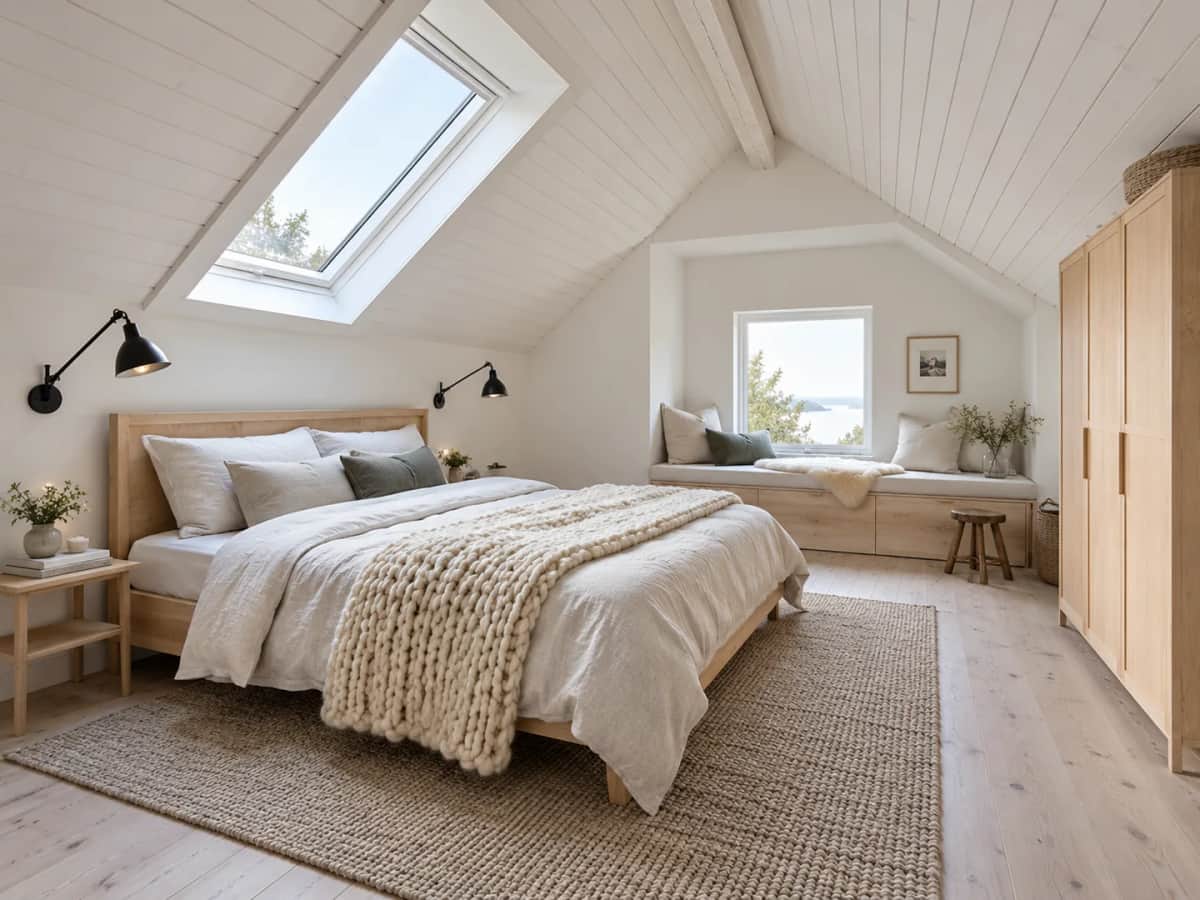
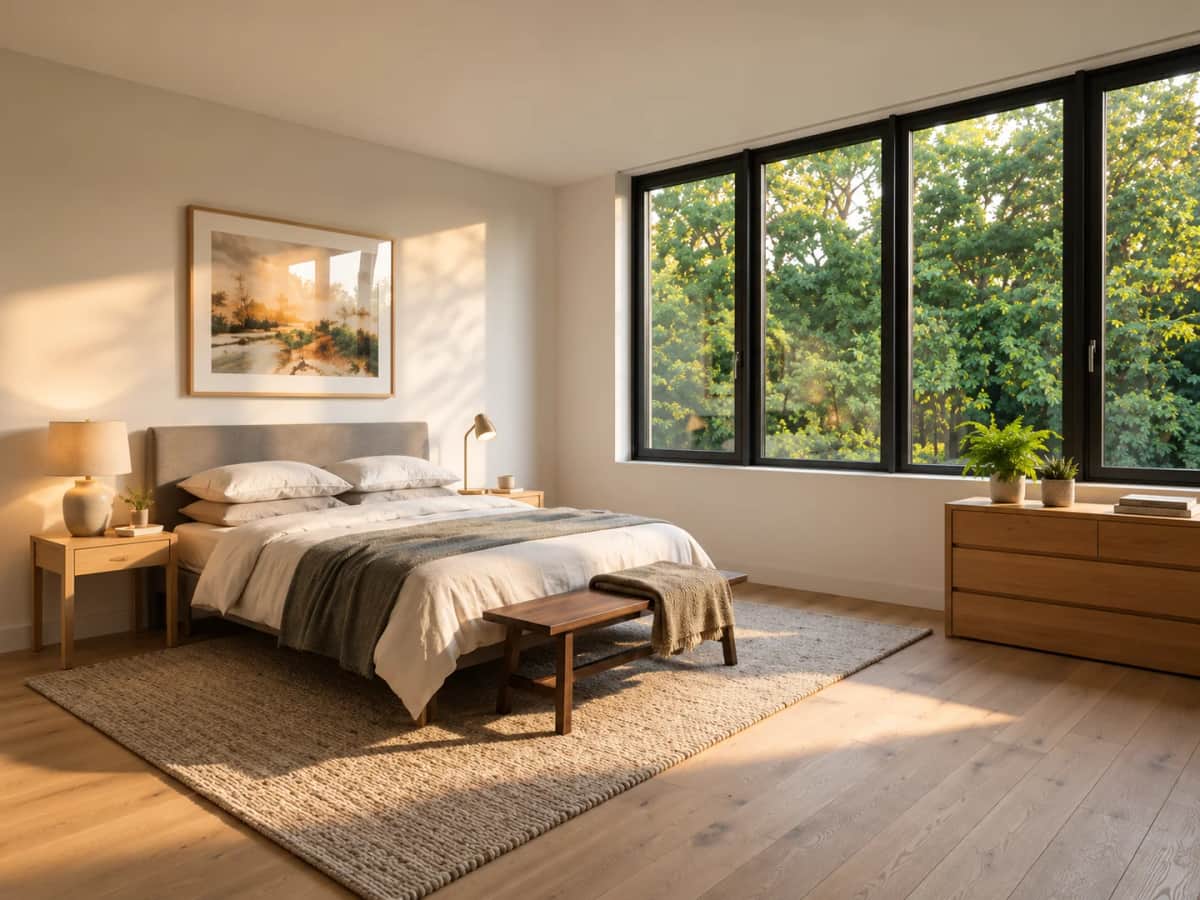
Scandinavian bedroom design pairs light wood and simple furniture with soft textiles. Use pale bedding as a base, then add a wool rug, colour or patterned cushions if you want more warmth. The room should work for everyday use.
AI-generated examples

Replace the sample with your bedroom photo before generating. You can change the preselected style in the tool.
Why this works in a bedroom
Practical furniture and layered textiles make this approach useful for an everyday bedroom. A bedside drawer, a washable cover and a rug beside the bed can matter more than matching every finish.
For a Scandinavian direction, try simple wood furniture with wool textures, subtle stripes or a coloured cushion. For a Japandi direction, you might prefer more woven surfaces, paper lighting and muted earth tones. These are overlapping options, not rules about bed height or how empty the room should be.
When it fits
- You want practical storage with simple handles and furniture that is easy to use.
- You like light wood and soft textiles but still want room for colour or pattern.
- You prefer changing covers, throws and lamps to replacing larger furniture.
Mistakes to avoid
- Choosing white upholstery or bedding without considering how easily it can be cleaned.
- Relying on a ceiling light alone when you read in bed.
- Buying a large rug without checking door clearance or how its edges sit beside the bed.
Before and after

Makeover notes
Layout
Arrange the bed around access to the wardrobe, window and door. A chest can double as bedside storage if its height and depth are comfortable. Leave space for drawers to open rather than fitting in a matching set at any cost.
Materials
Light wood, cotton bedding and a wool rug are useful starting points. The example layers a knitted throw over plain bedding. Choose washable covers where practical and keep existing darker wood if it works for you.
Color
White and warm grey can form a base for blue, green or patterned textiles. Try fabric samples beside the furniture under both daylight and lamps; the room does not need to be entirely pale.
Lighting
Combine general lighting with a reading lamp on each occupied side of the bed. A fabric shade gives diffused light; a directional lamp is useful for a book. Sheer curtains can filter daylight, with a separate blind or lined curtain for privacy and sleep.
How to recreate it
- Use pale bedding as a base, then add a coloured or patterned cushion if you want more variation.
- Repeating a pale wood can unify the bed and nightstands. Mixed woods also work; look for a shared undertone or repeat each finish elsewhere.
- Place plants where their light needs are met, keeping the walking route clear. A shelf can hold smaller pots.
- Slim hardware and lamps suit a light look. An existing bronze lamp can add contrast without changing the whole room.
Questions
How is this different from Japandi?
Both can use practical wood furniture and neutral bedding. Scandinavian combinations often include knitted textiles, colour and simple patterns; a Japandi direction might emphasise woven texture, paper lighting and earth tones. Mix elements that suit your storage needs and comfort.
Do I need to replace dark wood furniture?
No. Try lighter bedding or a rug around the pieces you want to keep. Repeating a wood tone in a frame or shelf can help connect it to the rest of the room.
How can I add warmth without changing the floor?
Try a wool rug, a textured throw and warm bedside lighting. Repeat an existing wood tone in a small item instead of replacing all the furniture to match.