Japandi bedroom design
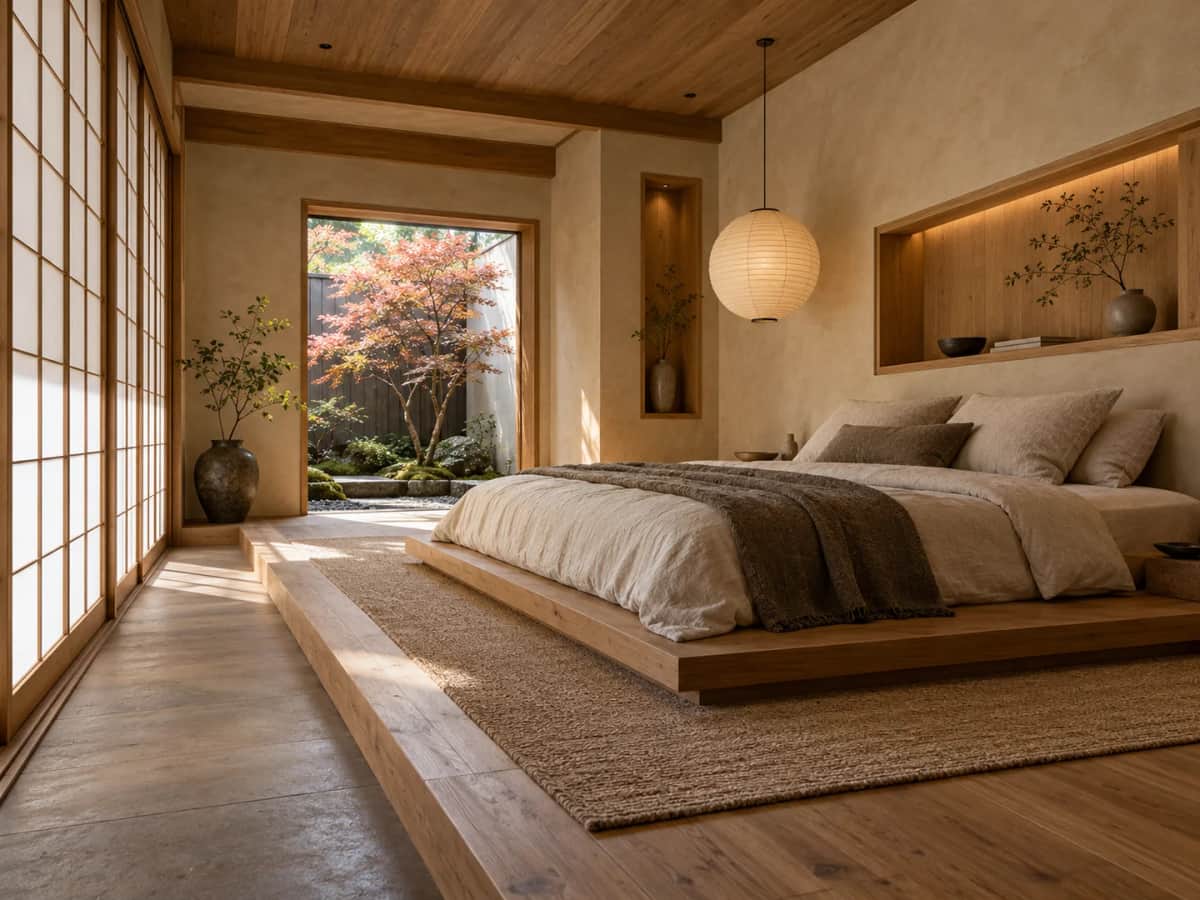
Japandi bedroom design combines simple furniture with warm wood, linen and soft lighting. Keep useful storage and leave some surfaces clear. A low bed suits the look, but comfort and access matter more than matching a reference image.
AI-generated examples

Replace the sample with your bedroom photo before generating. You can change the preselected style in the tool.
Why this works in a bedroom
Wood grain, woven textiles and diffused light offer a useful starting point for a Japandi bedroom. Closed drawers or a wardrobe can keep clothes organised while leaving room for books, artwork and personal objects.
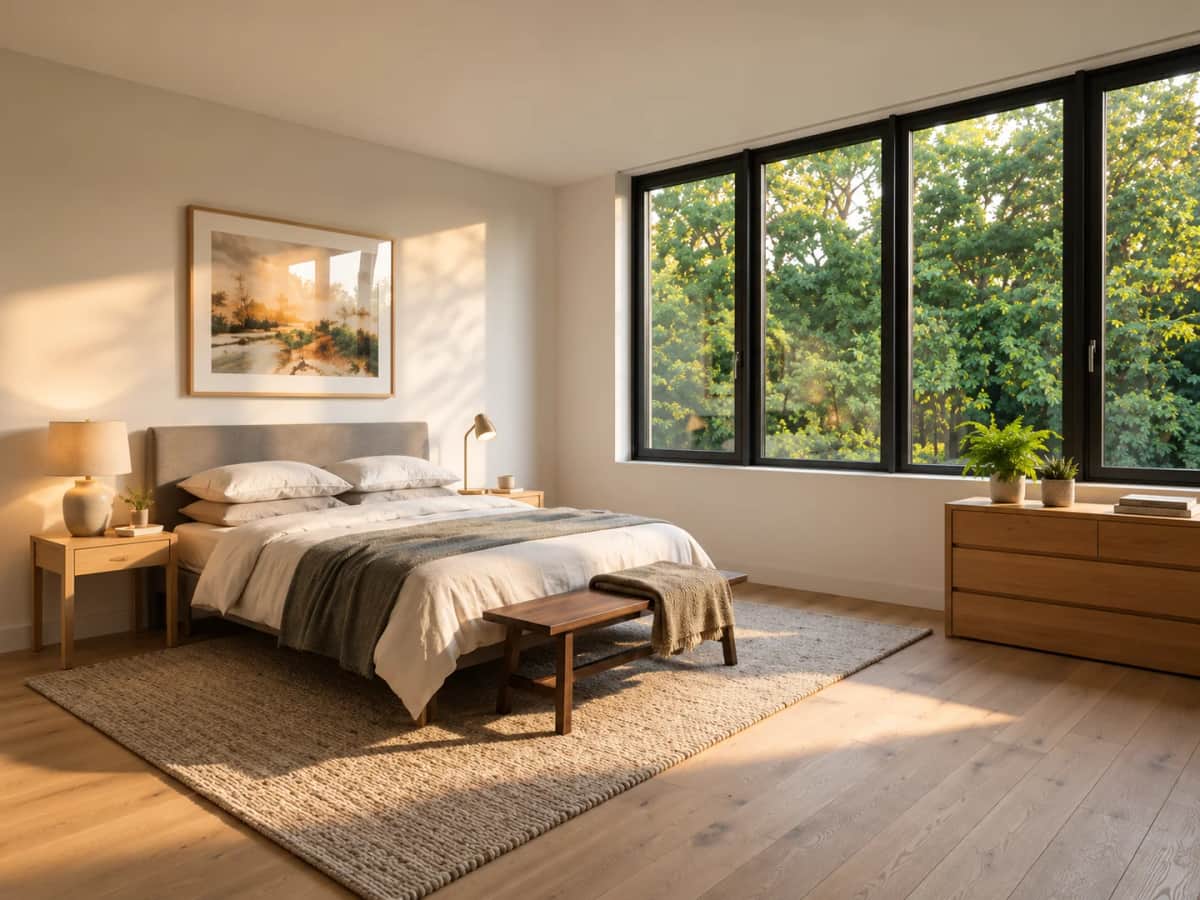
The example combines an upholstered headboard, wood bedside furniture and paper lamps. Layered cushions and fringed throws add texture; they do not need to be removed to fit the style.
When it fits
- You enjoy natural textures and a restrained palette, with a few objects on display.
- You need everyday clothes storage and prefer simple cabinet fronts.
- You want to keep wood furniture and connect it with neutral bedding or textured curtains.
Mistakes to avoid
- Choosing a very low bed that is uncomfortable to get into or stand up from.
- Replacing all your furniture to match one wood finish. Similar undertones or repeated materials can connect different pieces.
- Leaving windows uncovered when you need privacy or darkness for sleep.
Before and after
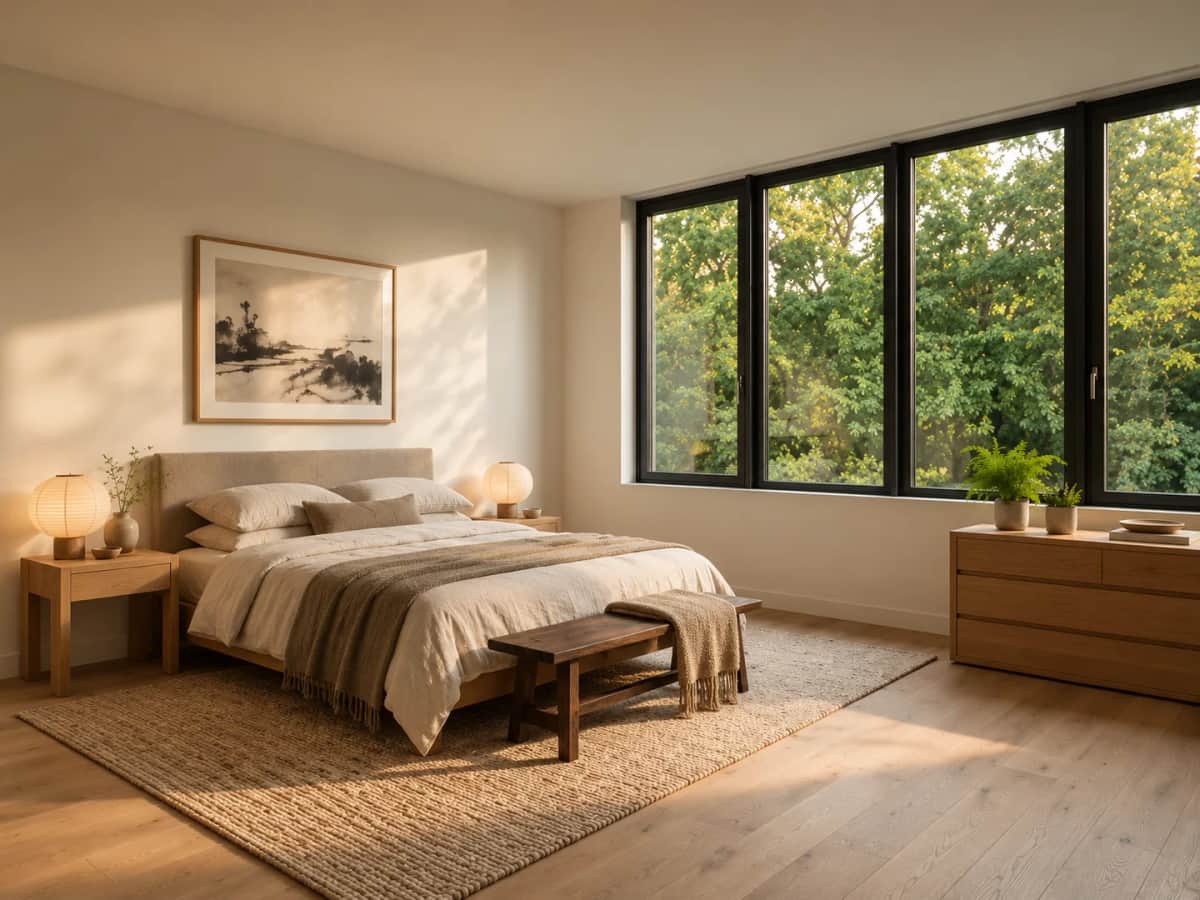
Makeover notes
Layout
Leave access to the bed and storage before adding a bench or chair. A single bedside unit can work in a narrow room; a larger wardrobe can be more useful than several small storage pieces.
Materials
Try linen or washed cotton with visible wood grain and a woven rug. Upholstered headboards, metal details and mirrors can also work; repeat a texture or tone to connect them to the rest of the room.
Color
Warm white, oatmeal and muted earth colours work with many woods. Keep a darker piece you like and repeat its tone in a frame or textile if you want it to feel more connected.
Lighting
Paper or fabric shades can soften general light, while an adjustable bedside light helps with reading. Consider separate switches so one person can read while the other rests. Add blackout lining or a blind when needed for sleep.
How to recreate it
- Keep the bed height that is comfortable for you and check that bedside surfaces are easy to reach.
- Choose a drawer, wardrobe or basket for items that otherwise collect on the floor.
- Add texture with bedding, a throw or cushions. Use as many layers as you find comfortable and practical.
- Choose curtains for privacy and sleep first, then select a fabric and colour that works with the wood and bedding.
Questions
Can I keep my existing furniture in a Japandi bedroom?
Start with the wood pieces you already like, then simplify bedding and lighting. Matching every finish is unnecessary. Mention furniture you want to keep in the prompt, but check the result because AI may replace or reshape it.
Can I use this in a small bedroom?
Yes, if the furniture fits. Prioritise a clear walking route and usable storage; a low bed is optional. The small-bedroom guide covers bed placement, opening clearances and shallow storage.
Does the restyle remove a beam or resize the bed?
The tool aims to retain the room structure, but AI can change furniture and apparent dimensions, and may alter architectural details. Check the result against your photo. It is a visual concept, not a measured drawing.