Northwind Switchgrass (Panicum virgatum 'Northwind')
Northwind Switchgrass (Panicum virgatum 'Northwind') is a stiffly upright native prairie grass for USDA zones 5–9 in our library (many nurseries list 4–9). It wants full sun (tolerates part sun), reaches about 4–5 ft tall and 2–3 ft wide, and is typically spaced 2.5–3 ft apart. Check your ZIP on our hardiness finder before you buy—microclimates still matter.
- USDA zones
- 5–9
- Sun
- full sun, part sun
- Height / width
- 4–5′ · 2–3′
- Spacing
- 2.5–3′
- Type
- grass · columnar · deciduous
- Planning estimate
- $8–20
Per plant, #1 container. Internal container-size budget band, not a current nursery quote or stock check. Confirm cultivar, pot size and local price with your supplier.
Our library lists zones 5–9; many nurseries list 4–9.
What Northwind switchgrass is
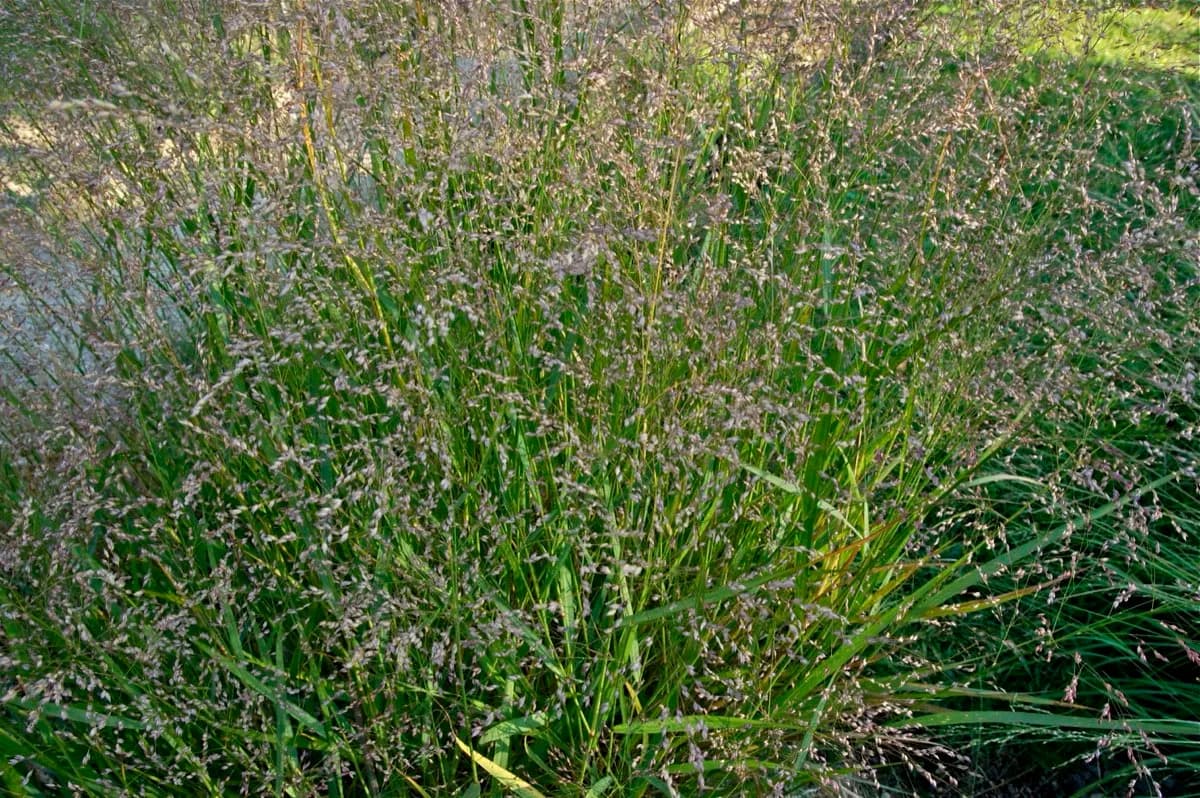
A stiffly upright native prairie grass that holds in wind, so it fits a screen or a repeating column in a yard — not a clump that leans after the first storm. Olive-blue blades turn golden yellow in fall and keep that structure into winter. Northwind is a named selection of switchgrass, Panicum virgatum, chosen because the clump stays narrow and upright instead of arching. The species is native to tallgrass prairie. Buy the cultivar when you want that column, not a floppy fountain of grass.
Hardiness and sun
Our library lists USDA zones 5–9 for this cultivar, in full sun (it tolerates part sun). Nursery tags often say 4–9, which is a wider band than we will claim. A sheltered city courtyard is not the same winter as an open hill two miles away — check your ZIP before you buy.
Enter your ZIPSize and spacing
Plan for about 4–5′ of height and 2–3′ of width at maturity. Space plants 2.5–3′ apart — that gap is the mature clump, not the nursery pot. Use those numbers when you are drawing a bed.
How to grow Northwind
Give it full sun. Skip extra fertilizer and soggy soil: both push soft, floppy growth. Once established it handles drought. Leave the stems standing through winter; cut them to the ground in late winter or early spring, just before new growth.
It spreads by short rhizomes rather than running. Plant at the spacing in the table so mature clumps touch without crowding.
Fall color and winter
Northwind switchgrass turns golden yellow in autumn, and the tan flower plumes stay on the plant through winter. That winter silhouette is why the stems stay up: they catch snow and stay upright when softer grasses flop. Do not cut it in autumn just to tidy the bed. The gold and the tan plumes are the winter show, and birds use the seed. Cut the clump to the ground in late winter, before the new olive-blue blades come through. The photograph above is Panicum virgatum, the species Northwind was selected from. Northwind itself is the stiff, narrow column of that grass.
Where to place Northwind
Put Northwind switchgrass at the back of a bed or as a repeating screen. At 4–5 ft it is too tall for the front of a low border. Space clumps 2.5–3 ft apart so the columns touch at maturity without merging into one mass. In a zone 5 to 9 yard it earns that back row: tall enough to screen a fence, narrow enough that three of them do not eat the bed. Leave a path on the sunny side so you can cut it down in late winter without standing in the border. It sits with other full-sun prairie plants that want the same dry-to-average soil: coneflower, blazing star, and a shorter grass in front. It is not a shade plant, and heavy feeding plus wet soil will make the blue blades flop.
Named selections in our library
These are variations of Panicum virgatum 'Northwind' — different flowers or habit, same plant underneath. They live on this page rather than each having one of their own.
Switch Grass 'Cloud Nine'
Panicum virgatum 'Cloud Nine'
5–9 · 5–7′ · $24–55
Heavy Metal Blue Switch Grass
Panicum virgatum 'Heavy Metal'
4–9 · 4–5′ · $24–55
What actually pairs with it
Every plant below shares this one's hardiness range, takes the brightest light it is grown in, wants the same kind of soil moisture, and fills a different layer of the border — so it can stand beside it instead of competing with it. Picked from our verified library against those conditions, not copied from a general list.
- middle layer
Eastern Red Columbine
Aquilegia canadensis
3–8 · full sun, part sun · 2–3′ · $8–20
- front edge
Creeping Phlox
Phlox subulata
3–9 · full sun · 0.25–0.5′ · $5–12
- middle layer
Blue False Indigo
Baptisia australis
3–9 · full sun, part sun · 3–4′ · $8–20
- front edge
Autumn Joy Sedum
Hylotelephium 'Herbstfreude'
3–9 · full sun · 1.5–2′ · $8–20
- middle layer
Blazing Star 'Kobold'
Liatris spicata 'Kobold'
3–8 · full sun · 1.5–2.5′ · $8–20
- front edge
Hameln Fountain Grass
Pennisetum alopecuroides 'Hameln'
5–9 · full sun, part sun · 1.5–2.5′ · $8–20
Meeting these conditions makes a pairing possible, not certain. Soil, drainage and how much room you actually have decide the rest.
Design a bed with these