Plants for Zone 6: Find What Fits Your Garden
Plants for zone 6 need a hardiness range that includes your zone, plus the right light, soil and room to grow. Start with the examples below, then use our library of 2,436 zone-matched records to compare mature size and spacing. Hardiness is a winter-temperature filter, not a survival guarantee.
Not sure which zone you are in? Look it up by ZIP code
686 of them are perennial or bulb records selected by the stated lifecycle filter →
Three plants for zone 6, compared by light and size
These are starting points for different sites, not a planting combination or a best-for-everyone ranking. Sizes below come from the same records as our plant browser. Check the linked plant profile and the exact cultivar before buying.
| Plant and source | Light in our library | Mature height × spread (ft) |
|---|---|---|
| Northwind SwitchgrassPanicum virgatum 'Northwind'Plant profile | Full sun, Part shade | 4–5 × 2–3 |
| Black-eyed SusanRudbeckia fulgidaPlant profile | Full sun | 2–3 × 1–2 |
| Christmas DaggerPolystichum acrostichoidesPlant profile | Part shade, Shade | 1–3 × 1–3 |
Start with 36 examples from 2,436 zone-matched records. Choose a light level and submit to browse matching plants, 36 per page.
Zone 6
- Typical annual minimum
- -10 to 0°F(-23 to -18°C)
- Matching species in our library
- 2,436
Typical annual minimum temperature: -10 to 0°F. 2,436 species in our library match this zone and light
- tree
Abeto Coreano
Abies koreana
- Zones
- 5–7
- Spacing
- 6–12 ft
- Mature height
- 15–50 ft
- Est. price
- $150–260
- shrub
Rockspray
Cotoneaster horizontalis
- Zones
- 5–7
- Spacing
- 6–8 ft
- Mature height
- 2–3 ft
- Est. price
- $24–55
- grass
Fraser's Sedge
Carex fraseriana
- Zones
- 5–7
- Spacing
- 1.5–2 ft
- Mature height
- 1–1.5 ft
- Est. price
- $8–20
- perennial
Japanese Spikenard
Aralia cordata 'Sun King'
- Zones
- 4–8
- Spacing
- 3–6 ft
- Mature height
- 3–6 ft
- Est. price
- $8–20
- perennial
Blue False Indigo
Baptisia australis
- Zones
- 3–9
- Spacing
- 3–4 ft
- Mature height
- 3–4 ft
- Est. price
- $8–20
- groundcover
Creeping Phlox
Phlox subulata
- Zones
- 3–9
- Spacing
- 1–3 ft
- Mature height
- 0.25–0.5 ft
- Est. price
- $5–12
- tree
Japanese Striped-Bark Maple
Acer capillipes
- Zones
- 5–7
- Spacing
- 30–40 ft
- Mature height
- 30–35 ft
- Est. price
- $150–260
- shrub
Littleleaf Cotoneaster
Cotoneaster microphyllus
- Zones
- 5–7
- Spacing
- 6–8 ft
- Mature height
- 2–3 ft
- Est. price
- $24–55
- perennial
Calamint
Clinopodium nepeta
- Zones
- 5–7
- Spacing
- 1–2 ft
- Mature height
- 1–1.5 ft
- Est. price
- $8–20
- Northwind Switchgrassgrass
Panicum virgatum 'Northwind'
- Zones
- 5–9
- Spacing
- 2–3 ft
- Mature height
- 4–5 ft
- Est. price
- $8–20
- perennial
Bleeding Heart
Lamprocapnos spectabilis
- Zones
- 3–9
- Spacing
- 1–3 ft
- Mature height
- 2–3 ft
- Est. price
- $8–20
- perennialAnnual
Cimbru
Satureja hortensis
Annual cultivation; the listed range is not a winter-survival rating.
- Zones
- 2–11
- Spacing
- 1–3 ft
- Mature height
- 1.5 ft
- Est. price
- $8–20
- tree
Cappadocian Maple
Acer cappadocicum
- Zones
- 5–7
- Spacing
- 20–25 ft
- Mature height
- 25–30 ft
- Est. price
- $150–260
- shrub
Blue Daphne
Daphne genkwa
- Zones
- 5–7
- Spacing
- 1.5 ft
- Mature height
- 3–5 ft
- Est. price
- $40–85
- perennial
Aspen Fleabane
Erigeron speciosus
- Zones
- 5–7
- Spacing
- 1–2 ft
- Mature height
- 1–2 ft
- Est. price
- $24–55
- vineAnnual
Flying Saucers
Ipomoea tricolor
Annual cultivation; the listed range is not a winter-survival rating.
- Zones
- 2–12
- Spacing
- 3–6 ft
- Mature height
- 8–10 ft
- Est. price
- $24–55
- perennial
Eastern Red Columbine
Aquilegia canadensis
- Zones
- 3–8
- Spacing
- 1–1.5 ft
- Mature height
- 2–3 ft
- Est. price
- $8–20
- perennial
Blunt-lobed Cliff Fern
Woodsia obtusa
- Zones
- 1–10
- Spacing
- 2–2.5 ft
- Mature height
- 1–1.5 ft
- Est. price
- $8–20
- tree
Pere David's Maple
Acer davidii
- Zones
- 5–7
- Spacing
- 20–40 ft
- Mature height
- 30–50 ft
- Est. price
- $150–260
- shrub
Kirilow Indigo
Indigofera kirilowii
- Zones
- 5–7
- Spacing
- 3–4 ft
- Mature height
- 2–3 ft
- Est. price
- $24–55
- perennial
Hardy Gloxinia
Incarvillea
- Zones
- 5–7
- Spacing
- 1.5–2 ft
- Mature height
- 1.5–2 ft
- Est. price
- $24–55
- vine
Everlasting Pea
Lathyrus
- Zones
- 2–11
- Spacing
- 1–3 ft
- Mature height
- 1–9 ft
- Est. price
- $24–55
- perennial
Deutschland Astilbe
Astilbe japonica 'Deutschland'
- Zones
- 4–9
- Spacing
- 1.5–2 ft
- Mature height
- 1.5–2 ft
- Est. price
- $8–20
- groundcover
Cranesbill
Geranium maculatum
- Zones
- 3–11
- Spacing
- 1–1.5 ft
- Mature height
- 1.17–1.5 ft
- Est. price
- $8–20
- tree
Devil Maple
Acer diabolicum
- Zones
- 5–7
- Spacing
- 20–40 ft
- Mature height
- 20–30 ft
- Est. price
- $150–260
- shrub
Gold Cone Juniper
Juniperus communis 'Gold Cone'
- Zones
- 5–7
- Spacing
- 1–2 ft
- Mature height
- 3–5 ft
- Est. price
- $40–85
- groundcover
American Twinleaf
Jeffersonia diphylla
- Zones
- 5–7
- Spacing
- 0.5–0.75 ft
- Mature height
- 0.75–1.5 ft
- Est. price
- $8–20
- vine
Virginia Creeper
Parthenocissus quinquefolia
- Zones
- 3–10
- Spacing
- 5–10 ft
- Mature height
- 30–50 ft
- Est. price
- $24–55
- perennial
Eastern Wood Fern
Dryopteris marginalis
- Zones
- 3–8
- Spacing
- 1.5–3 ft
- Mature height
- 1.5–2 ft
- Est. price
- $8–20
- groundcover
Ajuga
Ajuga reptans
- Zones
- 3–10
- Spacing
- 0.5–1 ft
- Mature height
- 0.5–1 ft
- Est. price
- $8–20
- tree
Fullmoon Maple
Acer japonicum
- Zones
- 5–7
- Spacing
- 15–30 ft
- Mature height
- 15–30 ft
- Est. price
- $150–260
- shrub
Chinese Neillia
Neillia sinensis
- Zones
- 5–7
- Spacing
- 0–6 ft
- Mature height
- 5–6 ft
- Est. price
- $40–85
- perennial
Dwarf Dandelion
Krigia montana
- Zones
- 5–7
- Spacing
- 0.5–1 ft
- Mature height
- 0.67–1.67 ft
- Est. price
- $8–20
- perennial
Baltimore Belle rose
Rosa 'Belle de Baltimore'
- Zones
- 4–11
- Spacing
- 6–10 ft
- Mature height
- 8–13 ft
- Est. price
- $24–55
- Bigleaf Hydrangeashrub
Hydrangea macrophylla
- Zones
- 6–11
- Spacing
- 3.5 ft
- Mature height
- 3–6 ft
- Est. price
- $40–85
- perennial
Alpine Violet
Cyclamen
- Zones
- 4–11
- Spacing
- 0.67–1 ft
- Mature height
- 0.33–1 ft
- Est. price
- $8–20
Does zone 6a need different plants from 6b?
Zone 6a has an average annual extreme minimum of -10 to -5°F; 6b is -5 to 0°F. Our library stores whole-zone ranges, so both halves share this list. Check the exact cultivar label for a borderline choice. Hardiness zones do not give your last spring frost, first autumn frost or planting date.
How to choose plants for a zone 6 garden
Start with your site rather than a long shopping list. Note how much direct sun the bed gets, whether water drains after rain, and its usable width. Then compare mature spread, not the size of the nursery pot. A plant can be rated for zone 6 and still be wrong for a wet corner or a narrow path.
From a plant shortlist to a spaced planting layout
Match the light first
Observe the bed through the day before using the light filter. A sunny front border and a shaded side yard can share a ZIP code but need different plants.
Check soil and local restrictions
Use the plant profile to check drainage and soil needs. Ask your local extension office or nursery about invasive plants and planting restrictions; this whole-zone list does not screen your address for them.
Leave room for mature growth
Compare spread with the distance to paths, walls and neighbouring plants. Check the cultivar: a compact selection and the species can need very different amounts of space.
For a simple example, a 12 × 4 ft bed has 48 square feet. A square grid with 2 ft between plant centres allows 4 square feet per position: 48 ÷ 4 = 12 positions. This is an area estimate, not a planting prescription. Edges, paths, shrubs and irregular shapes change the count; triangular spacing uses a different calculation.
Choose the actual plants first, then draw their mature spread on the usable bed area. Do not treat the nursery pot width as the final spacing.
Compare Northwind switchgrass size and spacingA recorded garden rendering example
This August 18, 2026 test edited the photo below using a structured planting prompt. It shows how a reference list can guide a visual concept; it was not a zone-6 site survey or a run of the current ZIP-based planner.
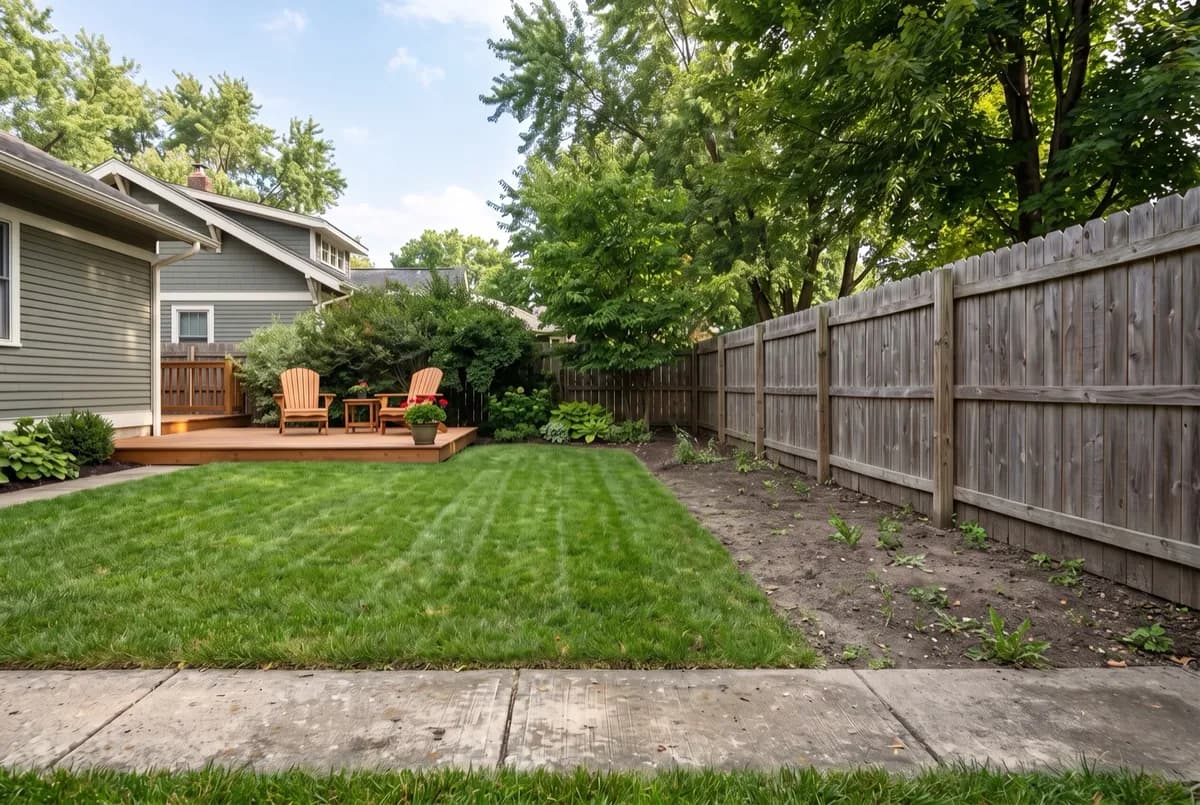
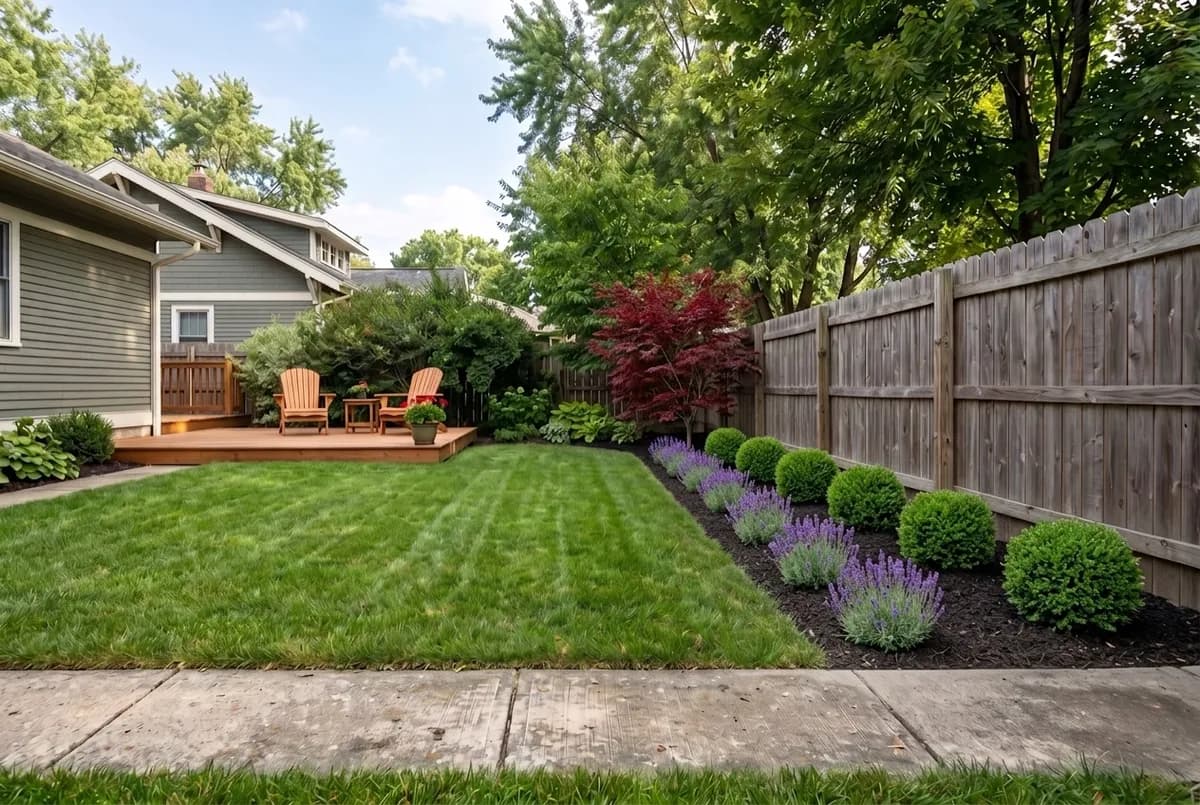
Reference list supplied in the test prompt
- 1 red Japanese maple
- 6 rounded boxwood shrubs in a row
- 8 lavender plants in front
These are requested counts, not plants verified in the output. The record does not contain a ZIP, sunlight measurement or bed dimensions. Species identity and quantities cannot be certified from the picture; use your own site conditions and a checked plan before buying.
Historical test, not a customer garden or a guarantee of current output.
See a planting idea in your own garden photo
Ready to move from a plant list to a visual concept? Upload a photo in AI Garden Design and enter your US ZIP, sunlight and dimensions. The tool filters its plant palette by zone and light and provides mature-size guidance and reference quantities. It does not place the three examples above into your photo automatically, and it does not produce a surveyed planting plan.
Sign-in and credits are required to generate. Confirm soil, drainage, final spacing and quantities on site before purchasing.
Questions before choosing zone 6 plants
- Are plants for zone 6a and zone 6b interchangeable?
- The library uses integer zones, so this page cannot resolve a plant’s half-zone cold limit. Confirm the exact cultivar rating if it is near its cold limit, and consider shelter, drainage and exposure at your site.
- Which zone 6 plants come back each year?
- Use the dedicated zone 6 perennials page for the narrower list and its classification limits. This page also includes shrubs, trees and grasses, so it is not a list of herbaceous perennials alone.
- Can I use the same list for pots?
- Do not assume an in-ground hardiness rating applies unchanged to an exposed pot. Ask a local nursery about the plant, container and overwintering conditions before buying.
Neighbouring zones
Where these numbers come from
The ZIP lookup uses PRISM Climate Group’s 2023 hardiness data (40,502 ZIP records). The catalogue uses stored NC State and Missouri Botanical Garden records. A versioned public extract and filtering method are linked below; upstream lifecycle and plant-type tags can conflict.
Card prices are internal container-size budgeting estimates, not current nursery quotes or stock checks. Verify lifecycle, cultivar, local restrictions, soil, drainage and dimensions. This is not the official USDA map.